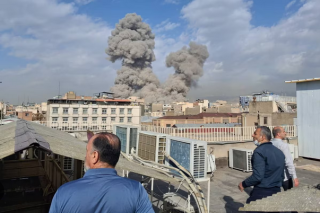
Operation Epic Fury: U.S. and Israel Launch Massive Joint Strikes on Iran; Trump Calls for Regime Change

TEHRAN / WASHINGTON — February 28, 2026
In a dramatic and sweeping escalation of Middle East hostilities, the United States and Israel launched a massive joint military operation against Iran on Saturday, February 28, 2026. Codenamed “Operation Epic Fury” by the U.S. Department of Defense and “Operation Roaring Lion” by Israel, the strikes targeted multiple strategic locations across the country, including the capital, Tehran, as well as Isfahan, Qom, and Karaj.
U.S. President Donald Trump confirmed the commencement of “major combat operations” in an eight-minute video address posted to social media. He stated the primary objectives are to eliminate “imminent threats,” dismantle Iran’s nuclear and missile infrastructure, and facilitate a complete change in government.
A Nationwide Military Campaign
The strikes, which began in the early morning hours, have been described by U.S. officials as a sustained, multi-day campaign rather than a singular event.
- Targeting Leadership: Initial reports indicate that missiles struck the district in Tehran where Supreme Leader Ayatollah Ali Khamenei normally resides. Attacks also targeted the presidential palace and the National Security Council headquarters. While Iranian state media reports that President Masoud Pezeshkian is “safe and sound,” the whereabouts of the Supreme Leader remain unconfirmed, though some sources suggest he was moved to a secure location prior to the strikes.
- Military Infrastructure: Dozens of strikes carried out by U.S. and Israeli aircraft targeted the Islamic Revolutionary Guard Corps (IRGC) headquarters, missile launch sites in western Iran, and naval assets. President Trump vowed to “annihilate” the Iranian navy and “raze” their missile industry.
- Civilian Impact: Iranian state-run media (IRNA) reported significant civilian casualties, including a strike on a girls’ school in southern Iran that reportedly killed at least 40 people.
The Rationale for the Attack
The escalation follows the collapse of high-stakes nuclear negotiations in Geneva. President Trump expressed deep frustration with the talks, accusing Tehran of using diplomacy as a “fig leaf” while continuing to develop intercontinental ballistic missiles capable of reaching the American homeland.
In his address, Trump made an extraordinary direct appeal to the Iranian public, urging them to “seize control of your destiny” and “take over your government.” He also offered “total immunity” to any IRGC members who lay down their arms, while warning that those who resist face “certain death.”
Regional Retaliation and Global Fallout
The response from Tehran was immediate. The IRGC launched waves of ballistic missiles and drones across the region:
- Israel: Sirens blared in Jerusalem and Tel Aviv as air defenses intercepted incoming barrages.
- U.S. Installations: Iranian missiles targeted the U.S. Navy’s 5th Fleet headquarters in Bahrain, as well as bases in Kuwait, Qatar, and the UAE.
- Gulf Neighbors: One person was reportedly killed in Abu Dhabi, UAE, by falling debris from an intercepted missile.
The conflict has caused immediate chaos in global travel and energy markets. At least eight countries—including Jordan, Iraq, and several Gulf states—have closed their airspace. Global oil prices have seen an immediate spike amid fears of a blockade in the Strait of Hormuz, through which a third of the world’s sea-borne oil passes.
International Reaction
The international community has reacted with high alarm, with many leaders calling for “maximum restraint.”
- India: The Ministry of External Affairs expressed “deep concern,” urging all sides to prioritize civilian safety and return to dialogue.
- United Kingdom: Prime Minister Keir Starmer chaired an emergency meeting to assess the impact on British nationals and regional stability.
- European Union: EU officials called the developments “concerning” and urged a full respect for international law.
Leave a Reply